Kilos Do Not Matter - Train With Vision

“Do not measure your progress by numbers alone.”

As I have started to coach more people in the art and science of weightlifting this is a maxim that I have started to understand more and more every day.

As a coach you are able to watch your athletes day in and day out. This allows you to understand them. To know what is motivating them. To acknowledge their strengths. To understand their weaknesses.

You are able to watch their movements change. You are able to watch their bodies change. You are able to even watch their minds change.

As an athlete it is hard to see these changes in yourself. So it is easy to simply see the numbers ie. How much weight you can lift.

All you see are the colour of the plates on the bar.

All you see is how much the man or woman next to you is lifting.

It is a deadly trap to measure your progress based on the amount of weight you can lift.

There is so much more that goes into this sport than how much you can lift.

You must look at HOW you are lifting.

Is your front rack getting tighter and elbows higher at the bottom of your clean?

Is your overhead position getting stronger and more locked in?

Is your back that was once slightly rounded in your start position beginning to get pulled into extension?

Are you more confident in stepping up to the bar each and every lift?

Are you catching your snatch lower and lower every week?

Are you able to offer advice to newer lifters when they ask for your help?

Do you still get as frustrated and angry when you miss a lift or are you now able to shrug it off and attack the bar on your next attempt?

Do you accept coaching and learn from it?

Do you spend time on recovery in the form of mobilizing, eating right, and sleeping?

These are all forms of progress that you should be proud of and celebrate.

Instagram has made it easy to post videos of your latest PR, but remember, as athletes and as coaches, there are other more meaningful forms of progress than increasing your total by a kilo or two.

You may have just set a PR, but always ask yourself “How did I set that PR?”

When you see elite level lifters setting World Records it often seems effortless. “Like butter on a bald monkeys head” as my imaginary Grandfather used to say.

Why is it that when you set a PR it looks like Quasimodo, and a bowl of mashed potatoes had a baby, which turned out to be twins who they named ‘Clean’ and ‘Jerk’.

q-cut-3-q

Now I am not saying that you shouldn’t try to lift heavier weights. You should.

BUT you should understand your limits and look for progress in other areas before you get pissed off because you aren’t as strong as you are ‘supposed’ to be.

You should not be disheartened if it seems like everyone else is making progress but yourself. You are not alone. Progress can be slow depending on where you are looking for your progress.

Look to how you are moving, how you are feeling, and how you are thinking when you are on the platform. Or better yet find a coach who can look for you. It often takes an honest and unbiased eye to shine a light on our greatest flaws and our greatest strengths.

Helen Keller once said that “The only thing worse than being blind is having sight but no vision.”

Make sure that you have vision when you train.

Make sure that you realize that it is a long road to where you want to be.

Make sure that you consider the kind of person you are becoming through lifting.

Make sure that you are helping others along the way.

Make sure that you are having fun.
Stop Training Harder - Train Better

Hitting training plateaus is normal.

How you break out of them is another story.

For most people the solution is not to train harder. You probably already do.

We live in a world where people love to train hard.

They #traininsane, #killedtheweights, go #beastmode, and get #mediocreresults

Here’s the thing. Maybe it’s not your training that is the problem.

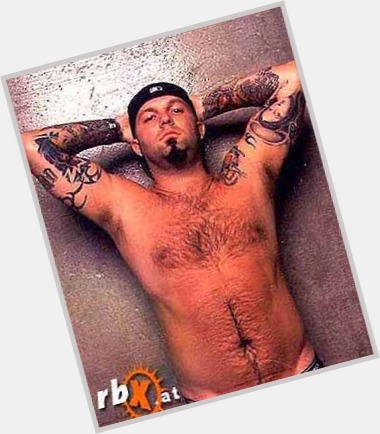
I’m not going to insult you by saying that you probably don’t train with the intensity that you think you do. However you need to realize that 1. Your training environment, training partners, and goals have more to do with your success than how much preworkout you take and how many Limp Bizkit songs you fit onto one gym playlist.


Fred Durst? More Like Shred Durst. 

So let’s assume that you go #beastmode in the gym. Great. That’s the first step.

Now let’s entertain a wild thought.

What you do for the other 22.5 hours of your day has a bigger impact on your progress then the time that you spend in the gym.

If you are spending all day sitting at a desk and are confused about why deadlifting always hurts your back you are a real piece of work.

If you go out and party every weekend, average 5 hours of a night and wonder why your strength is not increasing you are a ding dong.

If you never stretch or spend time foam rolling and are confused as to why you always feel stiff you are a silly goose.

You must master the boring and mundane parts of your life before you see great progress in the gym.

So here is what you can do you #animal #monster #freak

Take a careful self-evaluation and measure a few variables.


How much are you eating and what are you eating? (track this on MyFitnessPal)


How much are you sleeping?


How much time are you spending stretching, foam rolling, and getting massaged?


Are you spending time on your own to unwind and relax?

There are many more boring things that you can track and alter in order to better suit your goals, but these four are a great place to start.

Also make sure that you take some time to set your training goals. Why are you even training in the first place?

Once you have your goals always ask yourself the question “Is what I am doing congruent with achieving my goals”

Example:

Me: Mark.

Me: Yes?

Me: Is drinking 17 beers congruent with winning Olympic Gold in Speed Walking in 2020?

Me:…

Me: Answer me!

Me: no….

Me: That’s what I thought. Stick to 15 tonight would ya?

So try it out. Take a self-evaluation of your time outside of the gym. If you can get that under control I guarantee you will break through plateaus, go to the Olympics and become a millionaire.

Weightlifting 101: Mobility

So you decided to start Weightlifting. Now what?

When you begin Weightlifting you begin training with a purpose.

You begin training for competition. You begin training for pressure. You are training for three white lights. You are training with the knowledge that you very well could fail, and that you very well could succeed.

For many people this is a completely new experience.

Weightlifting is not working out.

You can no longer go to the gym, turn your brain off and put in the work.

Yes, there is a time and place for that in weightlifting, but you will not improve if that is how you approach each and every training session.

You must now look at the barbell and the platform as a piano, or a mathematical equation, or a golf club, or a blank piece of paper.

Your barbell is there for practice. It is there for you to develop a skill. This is a very important point.

You are developing a skill.

You are practicing.

You are not simply picking something up and putting it down anymore. You must approach each session as deliberate and deep practice.

Practice is not always comfortable. It takes deliberate and intense focus on a task that is oftentimes very difficult, and sometimes frustrating.

However, in order to improve you must embrace this mindset. You must be willing to put in the work, endure the frustration, engage your attention and focus on the task at hand. This task is no longer simply just ripping a weight off the ground. You must now be worried about positions and timing and a myriad of other things that you never had to think about before.

Coming in to train after a long day at work, shutting your brain off, and just going to work feels good because all day your focus has been in your mind and on external situations. Problems at work that need to be solved. Caring for family members, and planning for the weekend. All these things take us outside of our body and place our focus on the external.

As soon as you grip the barbell for your first set of position drills and stretches your mind must return inwards. You must feel points of tension, how does your shoulder feel? Are your heels coming up on your overhead squat? What is that pain in my wrist? Does this look right?

All of a sudden you must have a strong focus on your body and how it is moving.

When you move on to technique drills the focus must become even more absolute as you are moving a load in a dynamic, and perhaps unfamiliar, manner.

Is my back angle correct? Am I fully extending? Am I using my legs? Is my catch position timed well? All these thoughts and more can be racing through your head as you complete a single pull.

You are used to just grabbing the bar and pressing or pulling or squatting with all your might.

This is different. This is art. This is science. This is practice.

Treat it as such.

You must realize that it will not be comfortable. It is not always easy to release the frustrations of the day as you practice a movement that is difficult and frustrating itself.

So just realize that you are practicing. Practice is hard. Practice requires attention. Practice can be frustrating.

BUT realize that your practice will lead to skill. It will lead to immense satisfaction knowing that you pushed through the resistance, the frustration, and the doubt. You dedicated yourself to a task that very few people truly master and you mastered it.

This is what it takes to be successful at weightlifting: focused practice each and every training session, an attention to detail, and a burning desire for improvement.

There will be times when you will have to turn your brain off and move, but treat the barbell with respect. Look at it like the pianist looks at a piano. It is an extension of the body, a tool for expression, a means to share with the world the uniqueness that lies within.

Embrace the frustration and throw yourself fully into focused practice.

The satisfaction on the other side is worth it.

Keep pulling.

Weightlifting 101: Mindset

So you decided to start Weightlifting. Now what?

When you begin Weightlifting you begin training with a purpose.

You begin training for competition. You begin training for pressure. You are training for three white lights. You are training with the knowledge that you very well could fail, and that you very well could succeed.

For many people this is a completely new experience.

Weightlifting is not working out.

You can no longer go to the gym, turn your brain off and put in the work.

Yes, there is a time and place for that in weightlifting, but you will not improve if that is how you approach each and every training session.

You must now look at the barbell and the platform as a piano, or a mathematical equation, or a golf club, or a blank piece of paper.

Your barbell is there for practice. It is there for you to develop a skill. This is a very important point.

You are developing a skill.

You are practicing.

You are not simply picking something up and putting it down anymore. You must approach each session as deliberate and deep practice.

Practice is not always comfortable. It takes deliberate and intense focus on a task that is oftentimes very difficult, and sometimes frustrating.

However, in order to improve you must embrace this mindset. You must be willing to put in the work, endure the frustration, engage your attention and focus on the task at hand. This task is no longer simply just ripping a weight off the ground. You must now be worried about positions and timing and a myriad of other things that you never had to think about before.

Coming in to train after a long day at work, shutting your brain off, and just going to work feels good because all day your focus has been in your mind and on external situations. Problems at work that need to be solved. Caring for family members, and planning for the weekend. All these things take us outside of our body and place our focus on the external.

As soon as you grip the barbell for your first set of position drills and stretches your mind must return inwards. You must feel points of tension, how does your shoulder feel? Are your heels coming up on your overhead squat? What is that pain in my wrist? Does this look right?

All of a sudden you must have a strong focus on your body and how it is moving.

When you move on to technique drills the focus must become even more absolute as you are moving a load in a dynamic, and perhaps unfamiliar, manner.

Is my back angle correct? Am I fully extending? Am I using my legs? Is my catch position timed well? All these thoughts and more can be racing through your head as you complete a single pull.

You are used to just grabbing the bar and pressing or pulling or squatting with all your might.

This is different. This is art. This is science. This is practice.

Treat it as such.

You must realize that it will not be comfortable. It is not always easy to release the frustrations of the day as you practice a movement that is difficult and frustrating itself.

So just realize that you are practicing. Practice is hard. Practice requires attention. Practice can be frustrating.

BUT realize that your practice will lead to skill. It will lead to immense satisfaction knowing that you pushed through the resistance, the frustration, and the doubt. You dedicated yourself to a task that very few people truly master and you mastered it.

This is what it takes to be successful at weightlifting: focused practice each and every training session, an attention to detail, and a burning desire for improvement.

There will be times when you will have to turn your brain off and move, but treat the barbell with respect. Look at it like the pianist looks at a piano. It is an extension of the body, a tool for expression, a means to share with the world the uniqueness that lies within.

Embrace the frustration and throw yourself fully into focused practice.

The satisfaction on the other side is worth it.

Keep pulling.

Why

They say that you should start with ‘Why?’

And that is precisely what I plan on doing.

At 27 years of age I am not exactly ‘starting’ my life, but in a sense every moment is a chance to start again, a chance to gaze at a blank slate and make a new mark.

This realization, that we can start again, allows us to hang on to the hope of achievement, success, or victory; whatever those terms may mean to you.

To me victory means victory over myself. My greatest ally, and my most vile enemy.

Success means knowing that my portion is equal to my efforts, knowing that I have squeezed out every last drop and have left nothing behind.

I strive to strengthen my body and my mind because my ancestors did the same.

History is not a vacum.

It is not something to be viewed from behind a pane of glass or on a TV screen.

Your history cannot be analyzed through the lens of modern rational and sensibility.

This will rob you of your identity.

Those that came before you. Your grandparents, great grandparents, great great grandparents lived to survive in the times that they were thrust into. Some of them survived. Some of them thrived, some of them may have even tasted glory.

They knowingly, or unknowingly, were pushing us towards building a better world.

My ancestors came from royal blood as did yours. We are not seperate from those that came before us. We belong to them as they belong to us.

We are responsible to carry on the tradition that they created.

The tradition of hunger. The tradition of courage. And the tradition of self mastery.

I lift weights becuause I have to.

I have no choice.

I lift weights because my ancestors have put me on this path.

Their royal blood courses through my veins.

Their hunger gnaws at my stomach.

My mental circuitry has been refined over millions of years and I must push to refine it even further.

I have no choice.

I lift because to not lift would make me a slave to the comfortable flow of unconsciousness.

I have no choice.

I lift to bring people together.

I lift to crush my ego.

I lift to make my parents proud.

I lift to show myself that failure is a very real option and that we must do everything in our power to experience it and grow from it.

And so the question remains with you.

Why do you train?